Privacy Settings
In order to be able to better respond to the interests of our customers and talents, this site uses third-party website Tracking technologies.
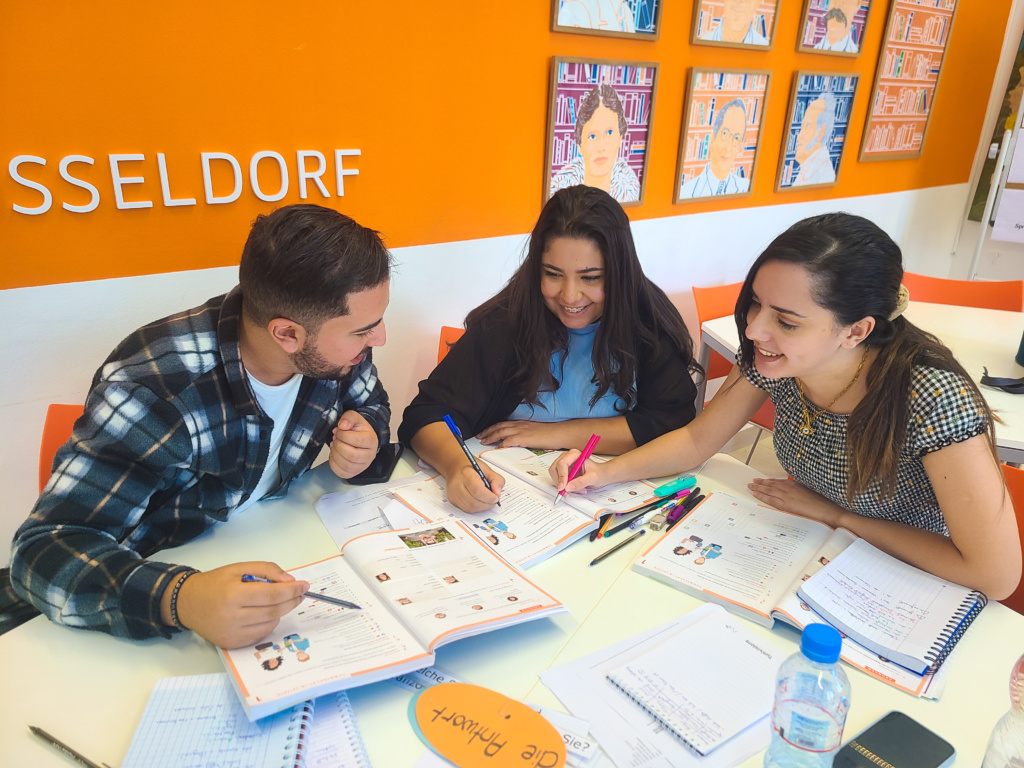
Anyone who hires international Nurses cannot avoid one topic: the language certificate. Without a recognized B2 certificate, there is no visa, no professional recognition, and no start of employment. But what exactly lies behind the different exams, and what does a B2 certificate really say about language proficiency in everyday nursing practice? We regularly receive many questions from employers on this topic. We passed them directly on to our expert Eva Kuschnerus, Head of Language School at TalentOrange.
Which language certificates do international Nurses need in Germany?
For professional recognition and the application for a work visa, only language certificates that are based on a standardized language examination are recognized—namely in accordance with the standards of the Association of Language Testers in Europe, or ALTE for short. Recognized examinations include those offered by the Goethe-Institut, telc GmbH, the Austrian Language Diploma (ÖSD), the TestDaF Institute, ECL, and the German Language Diploma of the Standing Conference of the Ministers of Education and Cultural Affairs. A certificate of attendance from a language school is not sufficient.
In most federal states, B2 language proficiency is a prerequisite for the recognition of a foreign professional qualification. Without this proof, it is not possible to work as a recognized Nurse in Germany. In many federal states, it is even required that the certificate be no more than one year old, even though the certificates themselves do not have an official expiration date.
Goethe, telc, ÖSD – does it make a difference for employers which language certificate a Nurse presents?
For employers, it makes no difference which ALTE certificate a Nurse presents. All recognized examinations are based on the Common European Framework of Reference for Languages and assess the same language level. There are certainly differences, especially in the structure of the exam. For learners, availability, price, and evaluation time ultimately play a decisive role. For employers, that is secondary.
In some federal states, Nurses can alternatively take the Fachspracheprüfung Pflege, which is also recognized as proof of language proficiency. Its advantage: language is tested in workplace-related contexts—so it can hardly get any closer to everyday nursing practice. The disadvantage: it is only available in Germany and is therefore not an option for professionals abroad.
The same applies to the nursing-specific variants Goethe Pro Pflege and telc Pflege B2. These are often not available abroad either. Anyone taking an ÖSD certificate should know that this exam may occasionally include Austrian expressions or mild dialect.
What does a B2 certificate really say about a Nurse’s language proficiency in day-to-day professional practice?
First of all, B2 is genuinely demanding! I recommend that employers try a sample exam themselves at least once. Even native speakers can find themselves stopping to think at one point or another. The exams aim to reflect real communication situations. In the oral exam, for example, two people plan something together. The point is not flawless grammar, but achieving a communicative goal.
At the same time, every exam reflects only a section of linguistic reality. In everyday professional practice, professionals encounter a much broader spectrum: spontaneous conversations, background noise, dialects, technical language, and everyday language in alternation. Some skills are significantly more important in everyday work than in the exam—above all, fluent, spontaneous speaking. Reading comprehension, for example, which has a fixed place in the exam, plays a secondary role in direct conversations on the ward. This cannot be fully reflected in an exam situation. That is why the certificate is an important formal entry ticket, but not a guarantee that someone will communicate smoothly from day one.
What helps employers support the start of international Nurses effectively?
A certain adjustment period is completely normal—and it should be planned for. Anyone who is new to Germany is simultaneously dealing with a new team, new work processes, a new environment, and a new culture. That is a lot all at once. As a rule, things settle down after a few weeks.
It is also helpful to look at the person’s language biography: How long ago was the course? Has the person practiced continuously since then, for example through conversation courses? Subject-specific language preparation also makes a major difference. General B2 and Fachsprache Pflege are two different things. Those who bring both adapt much more quickly to everyday nursing practice.
What should employers specifically pay attention to in a job interview when a B2 certificate is available?
The interview itself is the best test. Can I communicate with the person without major difficulty? Do they understand my questions? Do they respond fluently, even if not everything is grammatically perfect?
In addition, targeted follow-up questions are worthwhile: How long and how intensive was the language course? Full-time or part-time alongside work? Were qualified teachers involved? How long ago was the course, and what has the person done since then to maintain or further develop their German? Was there any subject-specific language preparation? These questions often provide more insight than the certificate alone.
How does TalentOrange prepare its talents for the exam and for everyday professional practice?
The certificate is the entry ticket, but the real work happens long before that. Our talents complete full-time intensive courses in small groups, six hours a day, with qualified teachers of German as a foreign language. We offer pronunciation training, homework support, and individual tutoring. And through subject-specific language training and intercultural training, we prepare our talents not only for the exam, but also for everyday professional practice.
We choose the exam format (Goethe or telc) pragmatically: based on availability, price, and the strengths of our teachers at the respective location. What matters to us is not the format, but the quality of the preparation. The certificate is then the formal entry ticket; our talents have already acquired real language proficiency beforehand.
And anyone who does not pass the B2 exam on the first attempt does not receive a rejection, but rather our Drei-Korridor-Modell: a structured support model for repeating the exam, including a small scholarship. Our goal is clear: every talent passes the B2 exam in the end!
Get our free guide “Language makes the difference. How language training for international professionals really succeeds.”
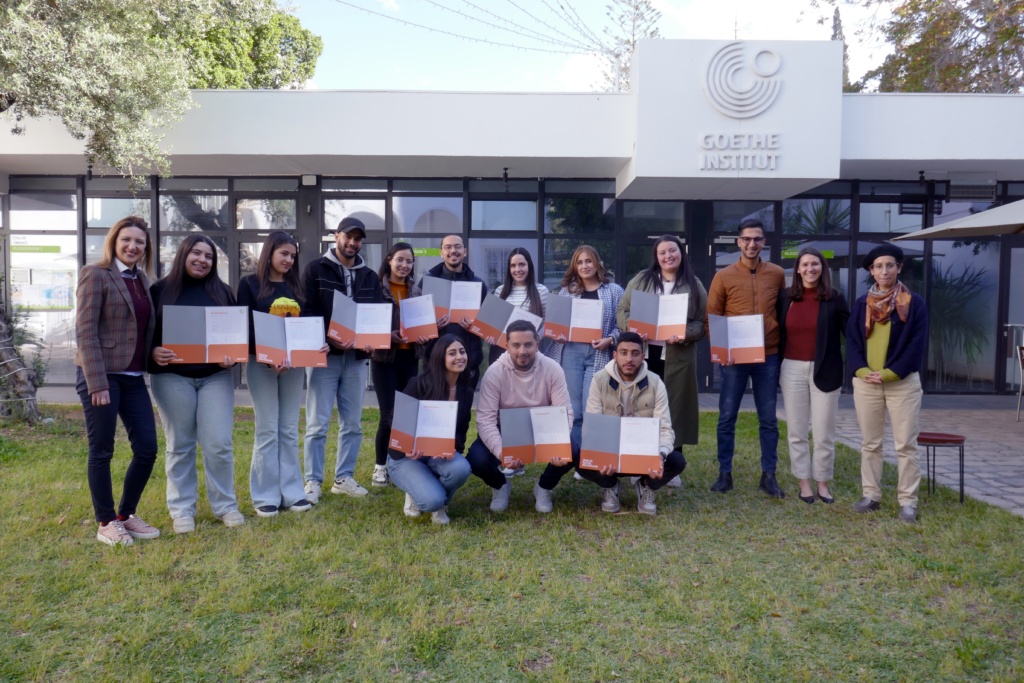
We work with 30 leading universities in 19 countries to find the best talent for your organisation — not only in nursing, but also for other professional groups.

Affection, appreciation and attention — children’s needs are similar all over the world. A multicultural team is more than just a solution to staff shortages.

Physiotherapists and occupational therapists trained abroad integrate quickly into your team thanks to our excellent German language training.

Unser Newsletter zum Thema internationale Fachkräftegewinnung.
Bleiben Sie up-to-date zu allen Themen rund um internationale Rekrutierung.