Intercultural Workshops
support onboarding
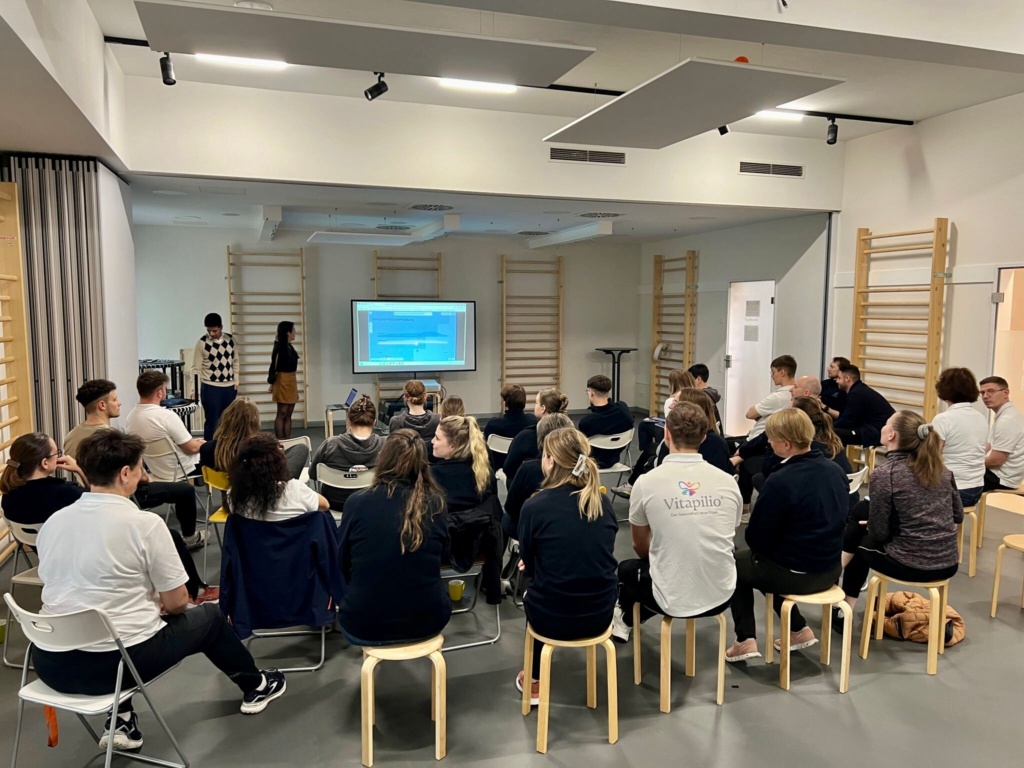
Everyone is looking forward to the new colleagues from abroad. But sometimes misunderstandings arise: Did he or she understand me? Why doesn’t he ask follow-up questions and instead always says “yes”? How can I encourage proactivity? What can we do to help the new colleagues feel comfortable and settle in well?
We address topics like these in our intercultural workshops. They are aimed at future colleagues of international skilled professionals as well as managers. In these approximately three-hour sessions, which we deliver on-site at your organization, we provide information about the healthcare systems and training standards in the countries of origin, as well as the motivations for emigrating. We highlight cultural specifics and work through potential “critical incidents”. We provide insights into our selection process, language preparation, and our ongoing support for the professionals. We tailor each workshop individually to the countries of origin and the professional qualifications of your skilled professionals. As a result, team communication becomes more effective and conflicts are avoided. Job satisfaction among employees, team spirit, and the quality of patient care (or childcare) increase.
A possible flashpoint for cultural differences could be, for example, when the new colleague from Asia does not say that she feels treated unfairly when she has to work more Sunday shifts than other colleagues. Or the colleague from Latin America simply does not submit his vacation requests for the following year, even though he has been asked to do so several times. The latter may be due to a different time orientation—he plans more at short notice. He still needs to get used to the desired long-term approach to vacation planning. The former may be linked to a different understanding of power: In their home country, it may be entirely normal not to question decisions made by superiors—whereas in our education system, critical questioning, including of authority figures, is encouraged.
As a theoretical concept, we use the “cultural dimensions” according to Geert Hofstede and E.T. Hall. Among other things, we explain in an interactive format how Germany and the respective country of origin differ with regard to individualism versus collectivism, power distance, uncertainty avoidance, and short-term orientation versus long-term orientation. This helps in everyday life in a clinic or daycare center: Behavior that may seem unexpected at first becomes understandable. Building on this, we work with participants to develop easy-to-implement strategies for how they can best support the new colleagues. We know from 13 years of experience: Working in intercultural teams is enriching when all colleagues know more about one another and are familiar with the culture of the new employees’ country of origin. That is why, at TalentOrange, an intercultural workshop for the receiving teams is standard. We prepare trainees and skilled professionals intensively for their life in Germany and for local standards and role expectations as part of their language course.
By the way, we think we could adopt some cultural practices ourselves. In Colombia, for example, colleagues bake the cake for the birthday person—not the other way around. That’s much nicer, isn’t it?